News June 2011Posted on 10th June, 2011.

Unearthing Stories
Work on the first series of artist commissions concluded at Snibston Discovery Park in Leicestershire. The work was showcased in May. You can find an online version of the stories for downloading on this page along with a photo-book extra. Enjoy! More jottings on the development of this project on this web page…

Interchatting…


I presented aspects of  work of the recent Intercultural Dialogue project at an event at the Centre for Contemporary Art in Glasgow, alongside Professor Ryszard Kluszczynski  from the Department of Media and Audiovisual Culture at the University of Łódźwho spoke about aspects of collaboration in the context of Biennales and ‘cultural exchange between Europe and Asia’. The Symposium – ‘Mashing Up: Curating Practice’ – was part of a series of events organised by the Centre for Russian, Central and East European Studies with the University of West Scotland and the University of Glasgow.

News April 2011Posted on 17th April, 2011.


Unearthing Stories
Work continues with Snibston Discovery Park in Leicestershire, part of a series of artist commissions, creating images and accompanying texts.  The work will be showcased at a multi-media event on May 15th, followed by a Professional Development programme for a group of local practitioners in June. More jottings on the progress of this project on this web page…

Me, Myself and Everything Else
A new photographic exhibition was launched at Phoenix Court Sheltered Housing in Castle Vale – loops of over 500 photographs taken by participants on the project, housed in ten digital screens mounted on a specially made stainless steel frame. The exhibition tours to various venues over the summer. The project was commissioned by Active Arts. View the project blog pages pages here: myaee.posterous.com.


Fourth Practice Exchange for Intercultural Capacity-Building
The report for this event is currently available online at Platform for Intercultural Europe. The Practice Exchange involved over 50 participants from fields of arts and education and from diverse cultural backgrounds in the UK, along with guests from Austria, Belgium, Slovenia, Sweden and Italy. Artists’ intercultural work with ethnic minorities was showcased and discussed by participants made up of theatre practitioners, art consultants, anti-discrimination activists and academics. The final report, by yours truly – with excellent editing support from Sabine Frank – covers it all. (You’ll find plenty of other interesting material on the Platform web site.)

News February 2011Posted on 15th February, 2011.


Unearthing Stories
I’m currently working with staff at Snibston Discovery Park in Leicestershire, as part of a series of artist commissions, creating images and accompanying texts.  Our starting point is to investigate objects in the stores collection, those objects currently not on (or never on) display. There are over a million objects stored in the Leicestershire museum service collections. In one room is stored a dismantled ‘panopticon’ or – more accurately – the Kaiser Panorama, a large circular wooden device invented by August Fuhrman in Berlin in the 1880′s.  ‘Left in store temporarily in 1969 by a Polish gentleman for about two weeks but never collected. Ownership vested in County council under Section 41 of the Local Government (Misc Provisions) Act 1982.’ Around its circumference would have been 24 viewing stations, where you would sit and peer into stereoscope lenses of rear-illuminated  stereoscopic photographic views, sometimes hand-tinted. An internal mechanical drum rotated every minute, so the viewer watched the views in sequence. These were images of what we might call ‘wonders of the world’.  (A working example exists in Warsaw, there called a ‘fotoplastikon’ – look at www.fotoplastikon.stereos.com.pl which has some useful background to stereoscopy). This particular model left in Snibston appears to have been still touring Austria between 1917 until as late as 1929, at a time when these kinds of viewing devices had been completely supplanted by moving pictures and the cinematographic technological supremacy of Eastman-Kodak.  The work will be showcased at a multi-media event on May 15th.

Me, Myself and Everything Else
An inter-generational photographic project on the Castle Vale estate in Birmingham, working with Geoff Broadway,  commissioned by Active Arts. One of the recent outcomes was a special issue of Vale Mail in December. Vale Mail is a free monthly newspaper distributed to over 4100 homes in the area.  The December issue featured a special wrap round about the ‘Me, You and Everything Else’ project. View the pages here on the project blog: myaee.posterous.com/vale-mail.  We’re now working on an exhibition of the project which will be opened at Phoenix Court Sheltered Housing on March 31st.


Fourth Practice Exchange for Intercultural Capacity-Building
I recently undertook the role of rapporteur for an event organised by Platform for Intercultural Europe and Border Crossings in association with Rose Bruford College of Theatre and Performance. The Practice Exchange involved over 50 participants from fields of arts and education and from diverse cultural backgrounds in the UK, along with guests from Austria, Belgium, Slovenia, Sweden and Italy. Artists’ intercultural work with ethnic minorities was showcased and discussed by participants made up of theatre practitioners, art consultants, anti-discrimination activists and academics. The finalised report will be made available online soon. Meanwhile you may be interested to read their Rainbow Paper - Intercultural Dialogue: From Practice to Policy and Back. Endorse the outcome and increase its impact at: rainbowpaper.labforculture.org

News November-December 2010Posted on 1st December, 2010.


Transform
I will be working on a project called Unearthing Stories at Snibston Discovery Park in Leicestershire as part of a programme of new artist commissions. The work will be showcased at a multi-media event in April, 2011.

Items Collected
An intervention at Wolverhampton Art Gallery, with a local arts group of Asian women and items from the gallery collections, commissioned as part of the Art of Ideas regional programme. Full information here…

Me, Myself and Everything Else
An inter-generational project on the Castle Vale estate in Birmingham, working with Geoff Broadway,  commissioned by Active Arts. The project blog is www.myaee.posterous.com.

People’s Portraits RevisitedPosted on 8th October, 2010.

News October 2010


People’s Portraits, curated by Brendan Jackson and Beverly Harvey at The Public in West Bromwich from Wednesday 6 October to Sunday 31 October.

A three screen projection selected from photographic documentation of Black and Asian history in the region, part of Sandwell’s Black History Month. Taken in the period 1988-93 during Jubilee Arts’ People Portraits Project (of which we were both a part), the images now function as a historical document of everyday life in the community at that time. Jubilee Arts championed communities to control how their shared identities could be represented by sharing aspects of their life experiences and achievements.

The show includes images from ‘Bickle’ (1989), a large scale exhibition containing photographic portraits and interviews with Afro-Caribbean elders, ‘Sandwell in Black & White’ (1990), a mass participation project in which diverse groups of residents were invited to document their life using a camera over the whole year, and ‘My Mother, My Daughter, Myself’ (1992) a collection of oral histories and portraits of three generations of Asian woman living in Smethwick.

An introduction to the exhibition can be downloaded here… People’sPortraitintro.pdf

Image above: editorial sessions with participants of ‘Sandwell in Black & White’ project, 1990
Below: Three screen installation.


we no longer talkPosted on 13th June, 2010.

We no longer talk, 136 pages, hardback.
Editor: Brendan Jackson. Publisher: Borderland Foundation, June 2010.

The book is a series of essays, photographs, reflections and quotes, which give a snapshot of some of the places and people worked with
over the past two years on an Intercultural Dialogue project – these include Wolverhampton, Birmingham, Leeds, Bela Rechka and Hania. We couldn’t include everything (sorry Warsaw, Sejny, Skopje, Baku and Walsall), but I hope it gives a flavour of the work and inspires further dialogues.

For details of availability, in Poland contact pamelawells@googlemail.com or in UK/elsewhere contact brendanjack@googlemail.com

Here’s a pdf of the introduction from Steve Trow. we-no-longer-talk-intro

In Living MemoryPosted on 11th May, 2010.

starbj

Curated by Brendan Jackson, a re-presentation of 111 photographs selected from the archives of the Express & Star newspaper, Jubilee Arts and Sandwell Council. The Express & Star was founded in 1880 and is still one of the biggest selling regional dailies. Jubilee Arts was a community arts organisation, founded in West Bromwich in 1974, the same year Sandwell Council came into being. The images in the show are a small personal selection from browsing through these archives, found in boxes and basements, images from West Bromwich and slightly further afield. Though there are a few photographs from the very beginning on the 20th century, the majority are within my living memory or that of my parents. Visitors can add their own photographs and stories…

On show at The Public, West Bromwich, West Midlands, UK, 11th May – 12th July. For details go to www.thepublic.com

picture3


24 Hour Big Culture BlogPosted on 8th May, 2010.

temple-copy

As a follow up to interchat event, and as part of the Birmingham bid for UK City of Culture 2013, on Friday 23rd April and Saturday 24th April we had team of social reporters out on the streets documenting life in the City of a 1000 Accents. You can see the whole blog as it happened at birminghamculture.org

Or you can check bj and simon’s contributions which are compiled on the Laundry site here: http://www.laundryline.co.uk/news/24-hour-blog-the-results/

interchatPosted on 23rd February, 2010.

interchatbanner-copy

April 7th and 8th, 2010
The Drum, Birmingham, UK

Further information and booking: www.the-drum.org.uk/event/interchat

Featuring Airan Berg, Linz 2009 European Capital of Culture (Austria); François Matarasso (UK); Fundacja Pogranicze (Poland); Laundry (UK); Nova Kultura (Bulgaria).

Wednesday 7th April, 2pm – 8pm
Artist-led sessions to explore good practice in community engagement projects, with local and international examples from Birmingham, Bulgaria, Crete and Poland, aimed at artists and practitioners wishing to develop their community practice with an international perspective.

Thursday 8th April, 10am – 4pm
A dialogue with Airan Berg and François Matarasso, exploring European approaches to artistic practices that invite social engagement, followed by case studies and interactive sessions led by Birmingham arts organisations. This day will be of interest to artists and agencies addressing cross-cutting agendas through the arts.

scattered thunderstorms in singaporePosted on 18th December, 2009.

snow

The trans-pennine express left Leeds on time, despite the ice and fog
and utter and complete disruption in the whole of the country. Just the foreboding of snow, you understand. BIG FREEZE ON THE WAY! announced news placards outside the station.

They drank coffee and stared intently at their i-phones. At first, for what seemed an eternity, reception was not good, lost in the tunnels through the granite hillsides outside the city. The train soon passed Dewsbury, where most people departed, and then Huddersfield, which had a station façade once called the most splendid in all of England.

Outside, the sky a gun-metal grey, the sleet spitting down, dirty cream coloured stone houses along the valleys emerging from the mist then disappearing again, and tall windows of the old mill factories still lit with electric light, though who knows what they contain these days.

I can access the wi-fi now, she said finally. She let out a long sigh of relief.

Mine’s still struggling, he said.

Cape Town, 21 degrees, Adelaide, 18 degrees. Singapore, 28 degrees. She reeled them off. Each destination, a shake of his head, eyes down, fixed on his screen. Moscow, minus 21. I don’t think we’ll be going there.

He asked, How about Hong Kong?

I haven’t got Hong Kong, love. Only Singapore. It’s coming up random. Brunei’s 29 degrees. Borneo’s near enough isn’t it? And Bangkok’s 33 degrees. Shanghai, only 7 degrees there. Rio De Janiero, 30 degrees.

Wrong side of the world, he said. He shook his phone, as if that would
cure it.

Singapore would be nice, don’t you think? It’s supposed to be very clean. And it’s an island, like Hong Kong.

Ah, he said. At bloody last! Now I’ve got Singapore. Friday 28 degrees, Saturday 27, Sunday 28. Scattered thunderstorms.

They were not young and perhaps had generous pensions. They both wore the same brand of pristine white trainers with a gold logo. They explored meteorologic conditions around the world together, as the train slowed on its approach to Manchester Piccadilly, steady at 2 degrees, passing avenues of red and orange shipping containers, stacked high, and no doubt bound for similar destinations, weather conditions permitting.

in skopjePosted on 23rd September, 2009.

bjsite

Creative Laboratory participants photographed on top of Mount Vodno, which overlooks the city of Skopje, Macedonia. Skopje, home to nearly half of the country’s population, was the location for an artist residency in association with cultural centre CK, as part of the Intercultural Dialogue project. Some photo galleries posted here…

that’s one long streetPosted on 7th September, 2009.

22

Once upon a time, I co-ordinated a series of projects for a community arts organisation called Jubilee Arts, under the banner of ‘The People’s Portrait of Sandwell’. This was a series of exhibitions made with local participants – using photography and text – which challenged many of the prevalent negative stereotypes of the Black Country. One exhibition was called ‘The Golden Mile’, made by young people interested in learning photographic skills – it documented lives along length of West Bromwich high street, which at one point was the longest high street in the country, once prosperous but now, in the late 80’s, much fallen into disappear, partly pedestrianised, severed in two by an inner ring road and a nondescript 70’s indoor shopping mall. The exhibition was first shown in a specially customised ground floor of a former shop on the southern end of the high street. Many years later, when Los Angeles based artist Kim Abeles visited West Bromwich (how we came to meet is too long a story), she was inspired to make a photographic piece about the high street. The final piece consists of two panoramic photographs (over 120 feet long) of each side of the High Street – taken over a period of years, in rain and sun, in different seasons, with remarkable detail composited from some 1500 digital images. The prints have been made in a limited edition of 10, with one set due for exhibition of her work in Bejiing. The panoramas are currently on show at The Public in September and October. You’ll find an online interview with Kim Abeles here at studio-online.com

11

30 degrees and risingPosted on 20th July, 2009.

caff

There are cafes and there then there are caffs. Caffs from memory, by the old Bull Ring underpasses and the coach station, where various members of  Dexy’s Midnight Runners would hang out, or The Hawks, or TV Eye, or The Prefects or any number of groups  with punkish attitudes, sitting glumly on a cold summers day, nursing  large chipped mugs of builders tea, a brown tea almost thick as hot chocolate. Everything was a shade of beige, or grey or a dirty industrial grime.  There are still some of these places left, which pre-date the invention of the cappuccino.

But now, we wander around Stara Ochota, and come across a new favourite cafe, near to the Filtry waterworks. In the shade, a near perfect place as you can find to plan a creative laboratory for Macedonia in September. The plans take shape, the delicious pastries are consumed…

New postings on the Intercultural Dialogue project in the July News section of the project web site.

duffy

Image: Stephen Duffy in one of those caffs near the old Bull Ring….

In CretePosted on 26th May, 2009.

stcatherine

St. Katherines Chapel, Kandanos. We were given a tour of Kandanos by students from the village school, who participated in the Creative Laboratory in Hania. Details of the project can be found at the Intercultural Dialogue web site…

Through the Looking GlassPosted on 22nd April, 2009.

garf

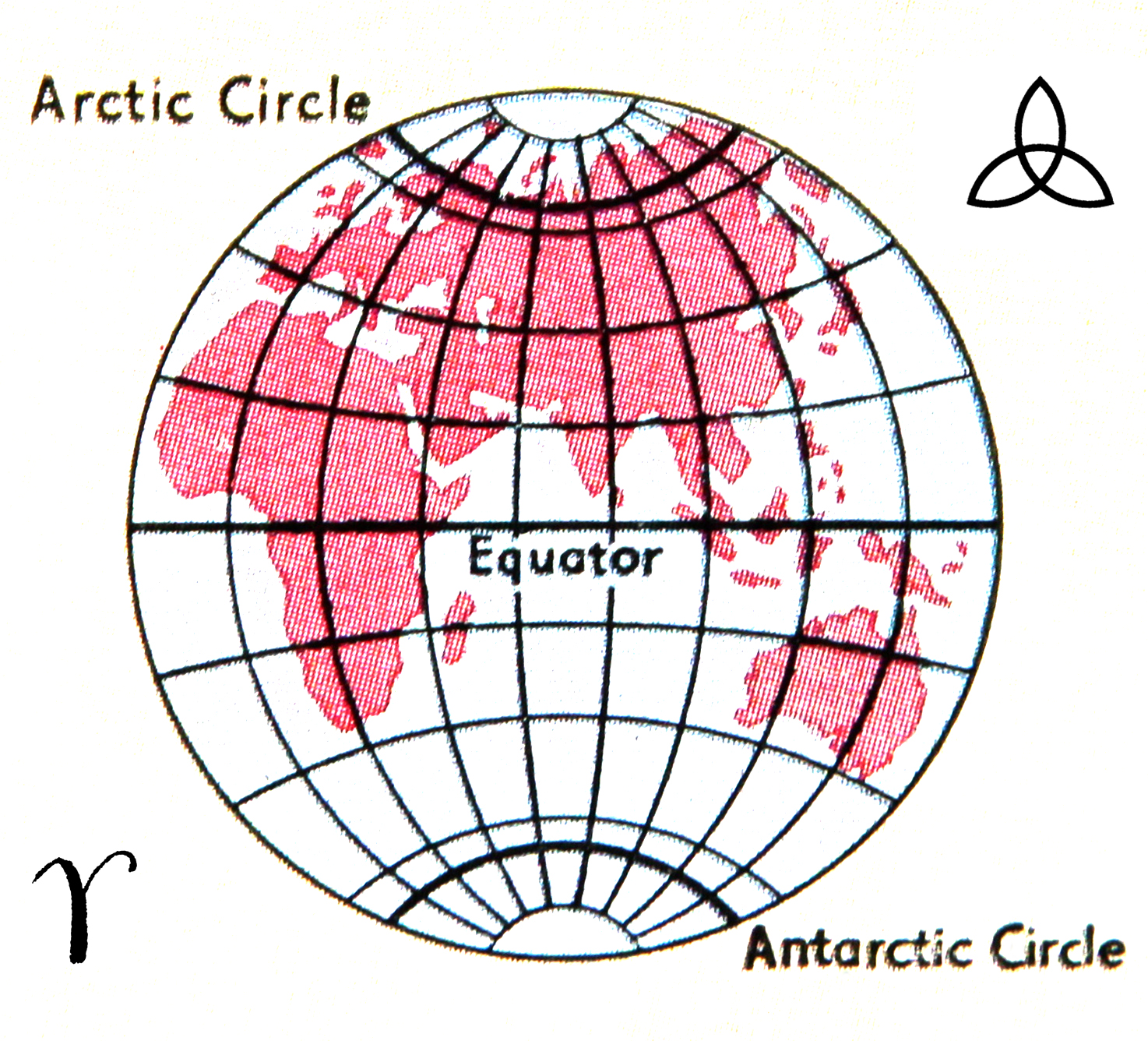
I have never fallen down a rabbit hole, as Alice in Wonderland once did, but I have been to some peculiar and topsy-turvy places. I was brought up in Great Britain – and I use this term deliberately. In the primary schoolroom of my childhood, the main feature I can recall is a large antiquated map of the world. When this particular edition of the map had been printed, in the 1920’s, the British Empire ruled over a quarter of earth’s total land area. Vast tracts were coloured pink – representing all the dominions, colonies, protectorates and other territories ruled over by the Queen, her father and grandfather. On a book shelf, next to the map were paperback copies of various volumes Winston Churchill’s A History of The English-Speaking Peoples, and various tales by Rudyard Kipling or H. Rider Haggard or Arthur Conan Doyle. We were children of mostly Polish or Irish descent, in a school run by The Sisters of Mercy, and our stern-faced teacher was a Mr. Gavin, who came from Galway and who always wore a dark green worsted wool suit. He had the stern demeanour of Éamon de Valera, the President of the Republic of Ireland. Catholicism rather than Empire seemed to be our common denominator, though in the mid-1960’s a quarter of the class emigrated to Canada and South Africa, leaving the football team depleted and vacancies for centre forward and centre-back to be filled by mediocre players. I stayed safely in goal. Even in the bright light of that decade, decolonisation and decline blurred the edges of our world.

Mr. Gavin was a keeper of books – his favourite volumes were Treasure Island, The Hobbit and Through the Looking-Glass, and What Alice Found There – and he often quoted from them. The map of the Empire was another teaching aid, or an encouragement to be inquisitive, to be curious about the world beyond these walls. He would point and ask, Where is Tulsa? If you were 24 hours away, where would you be? At the time, we rarely understood these references, but perhaps they were planted as seeds to be activated at a later time.

Azerbaijan, on this map in this provincial classroom, would have been one of the most southerly parts of the Union of Soviet Socialist Republics, of which it became a part in 1922, and remained a part until independence in 1991. Iran is to the south, Georgia, Dagestan and Chechnya to the north, Armenia to the west, the Caspian Sea to the east. Now Mr. Gavin may well have pointed out this place, given that it had some prominence. Tofik Bakhramov from Baku was the linesman who helped to award the crucial goal for England in extra time the 1966 World Cup Final between England and West Germany. The Azerbaijan national stadium in Baku is named in his honour. Back then, people referred to him simply as ‘The Russian Linesman.’ Baku is the capital and the largest city with (in 2005) 2,036,000 inhabitants, of which 153,400 are listed as ‘internally displaced persons’ and 93,400 refugees.

Forty years ago Baku was a desert city; in many respects it has remained so until today. In the earlier time, however, there was not a single street that might be considered European. Not a single tree sheltered the inhabitants from the burning heat. The whole city consisted only of clay huts and a few barbaric palaces, which were built on the desert sand and surrounded by a single wall; the thick walls of the palaces afforded but slight shelter from the sun. There was no water in the city; there were no rippling fountains such as every other house in the Orient possesses; water had to be brought in sacks from the distance and hardly sufficed for drinking and washing. When the heat became unbearable, the wealthy people left their houses and went to the seashore, where they could pretend or imagine that it was cooler.
- Essad Bey, writing in 1931

Built on the arid shore of the sea, the growth of the city has been fuelled by petroleum exploitation. A century ago, when this was the largest oil field in the world, the Nobels and the Rothschilds and other foreign investors were making their fortunes here, building large elaborate mansions near the sea front, their ornate facades a hotpotch of architectural styles. Oil meant work and workers flocked here from many countries, the hard working conditions attracting agitators and radicals, and a growing Bolshevik presence. The symbols of Bolshevism have all but disappeared, though perhaps not the cult of personality. Many billboards feature Heydar Aliyev,  ‘Father of the Nation’. Streets, new buildings, even the airport, are named after him. Aliyev was leader of Soviet Azerbaijan, and then President of the Republic from 1993 to 2003. His son is now President, and the reshaping of Baku continues to grow at a remarkable pace. At times, a yellow pall hangs over the city, reminiscent of smog in Delhi or Los Angeles, and this is a windy place. It gets unbearable in the summer, we are told, You know, the name itself comes from the old Persian name, Bād-kube, meaning wind-pounded city.

On the outskirts of the Old Town, we looked at some beautiful old houses with overhanging wooden balconies. They were in a state of disrepair and decay. We want to knock them down, one young man told me, We want new modern buildings! And new modern buildings there are, seemingly hundreds, the city in a state of permanent fabrication. There are grand new parks and fountains, a miniature waterfall, wide boulevards being dug up and stones relaid, high rises rising high amidst clouds of cement dust and the petrol fumes in the air.

high

We walk along a long promenade reclaimed from the sea, the sweep of the bay before you, with the old docks and Turkmenistan ferry on one side, and the Yasamal slopes rising on the other, and I am reminded of Barcelona before regeneration. Though Baku may be modelling itself more on Abu Dhabi, with the development of luxury off-shore housing complexes. We’re told that one of the islands out in the bay was once part of the Soviet Gulag, and will become a Disneyland. It seems far-fetched, but maybe not. We pass a large metal tower, near a new conference and business centre under construction. Here my Father used to come as a young man and jump off to practice parachuting, says our friend, Just for fun. This was entertainment in Communism times. But he preferred mountain climbing.

It’s a strange place indeed. This was the common refrain of the engineers from Essex and Scotland we shared a cigarette with in Moscow airport, who had travelled back and forth for several years, working on the South Caucasus Pipeline – which pumps energy to our hungry markets in the west. Here is a terra incognita, a fantastical land where everything is reversed.

baku-insert

(image: Found object in a street in Baku, near Fountain Square)

And, in turn, how must we be viewed? We are asked, What do you think about the death of Darwinism in England? Or we are told that both our country and Europe is doomed due to the combination of two calamitous factors – the falling birthrates, and the dissolute life of our young people, wholly preoccupied with drugs and sex and alcohol. (Ah, The Hacienda has a lot to answer for.)

There is an absence of what is familiar and known, then I am finally reminded of the writings of Essad Bey: ‘Often. All too often, Azerbaijan is visited by strangers. Writers, journalists, scientists, of all kinds come by train to the capital, view the oil-derricks, gaze in wonder at the eternal fire and the old ruins, find out there is “nothing doing” in the interior, and go on to Russia, to Georgia, or to Persia, with the sincere conviction that they have learned to know Azerbaijan.’

cats

Note: Bey wrote a famous novel, Ali and Nino (published in Germany in 1937), which tells of the love between an Azeri and a Georgian, and set against the backdrop of the First World War. He used the pen name Kurban Said, and was a Jew born in Baku who converted to Islam and led a life which itself reads like adventure fiction. Much of his fascinating story has been uncovered by writer Tom Reiss, and you can explore this on his really great web site – www.tomreiss.info (And you’ll find a gallery of Baku images posted on the intercultural dialogue web site.)

Still In the United KingdomPosted on 22nd April, 2009.

In the yard in the community hall opposite my house, a playgroup acts out their version of ‘St. George and the Dragon’. Further down the street, the procession for Vaisakhi passes. Everyone is in a good spirits. In the discussion after the recent Identity and Divided Society talk at Wolverhampton Art Gallery, someone asked, When was the last time you saw a Union Jack? And I couldn’t remember. Neither could anyone else there. But then, the very next day I see one draped over a wholesale tile centre in Oldbury, and then one on the top of Birmingham Council Chambers. My daughter sends me a photograph of one she found in an abandoned factory in the Black Country. A few days later I am sent one from a Bosnian group in Birmingham, from a sporting event they attended in Austria.  Perhaps the Union Jack flag is making a comeback, in this time of diversification and contested devolution?

flag2

flag

Upcoming presentationsPosted on 27th January, 2009.

Wolverhampton Art Gallery has a contemporary collection of artworks dating from the 1980′s, addressing ‘The Troubles’ in Northern Ireland. There are a series of talks, presentations and films as part of their current exhibition programme. Here’s just two of them I’m involved with…

Caribbee Island Saturday 21st March, 1pm, Wolverhampton Art Gallery. An encounter with Caribbee Island; the Irish quarter of Wolverhampton in the 19th Century.

Identity and Divided Society Thursday 9th April, 1pm, Wolverhampton Art Gallery. Explore how Northern Irish identity has been addressed within images in the Northern Ireland Collection in an open discussion.

web updatePosted on 15th January, 2009.

All galleries back online. Animator & and Piddle Valley relocated to Project Archive section…..

Book of the BridgePosted on 10th January, 2009.

bookcover

The Borderland Foundation have published ‘The Book of the Bridge’, 146 pages of documentation of the Bosnian Triptych project (2006). Essays in three languages (English, Polish and Bosnian) by  Krzysztof Czyzewski, Ranka Mutelevic, Tanja Miletic Orucevic, Brendan Jackson and Wieslaw Szuminski, lavishly illustrated by photographs from the media workshop and the book workshop.

Build completePosted on 7th January, 2009.

build

The film project with the BUILD group (Be United In Local Development) is undergoing final tweaking in the edit suite at Kingshurst Technology College. A group of young people from the college have worked on a media project about the regeneration of North Solihull and are putting the final touches to it. More info at the Laundry web site…

short stories from the world of intercultural dialogue 2Posted on 16th December, 2008.

short2

We had an hour to kill before the next meeting at the Synagogue. A warm rain was beginning to fall. We went down into a basement clothes shop. This part of town was empty, and he seemed glad to see us. We talked while Bev decided on some outfits for the festive party season in Birmingham. He’d lived in Brussels for a while. He said, And I married a woman from Belgium. I made a mistake and came back here. She loves the sunshine but I hate the sunshine. She goes to the beach and I go to the bar. He asked us to come back and visit and tell him more about the project. We will.

- In a back street in Hania, Crete

A Swedish CartoonPosted on 15th November, 2008.

Thankyou to Sara and Helena who drew this cartoon on the plane from Birmingham back to Gothenburg – a sort of homage to the vodka project (and a warning not to drink Mad Dog with Polish people).

Amsterdam NorthPosted on 28th October, 2008.

ja.jpg

I look at this picture and find myself thinking of one of the best known Victorian paintings, ‘The Last of England’ by Ford Madox Brown. Back then, in the 1850’s, his painting was a comment on mass emigration away from the British Isles, so many forced by economic hardship to seek their fortunes or otherwise in the colonies or the Americas.

This photograph was taken on the ferry returning at dusk from the old shipyards of NDSM, along the waterfront of Amsterdam Noord, now a developing creative quarter, with the headquarters of MTV Europe in a former wood factory, artist studios, event spaces and cafes. Alicja and I travelled to the Netherlands with a group of students from a college in Solihull, who have produced a short film about the regeneration of their local area, (with a little help, advice and organisation). The trip was both a thank you for their work, and an opportunity to reflect on what they have learnt during the project.

short stories from the world of intercultural dialoguePosted on 8th September, 2008.

bulgar1.jpg

It’s a beautiful country, but we don’t take care of it. We Bulgarians have a
lot of negative energy. Everything is bad. When the conductor came, did you
see how I refused to pay for a ticket? I told him, This train is dirty and crowded, standing room only. Why should I pay for such conditions?

- On the dawn train from Lakatnik to Sofia.

To LublinPosted on 11th July, 2008.

lublin1.jpg

The train from Warsawa Centralna first crosses the Vistula river through Praga district and then swings south past the village suburbs of Swider and Srodborow, slowly moving across the flat plain of Mazovia that surrounds the capital. ‘Not the most attractive of landscapes’ is how many guide books describe it. A few hours later, on the other side of the Kampinoska forest, after dark we arrive in Lublin. A city of over 350,000 inhabitants, centuries old, site of the Union of Poland and Lithuania in 1569, which many contemporary observers cite as the medieval model of the contemporary European Economic Union, proposing as it did a ‘cooperation based on respecting the identity of those peoples and nations and preserving their ethic, cultural and religious features.’

The pungent smell in the air outside the station comes from the beet factory nearby. Further along the road is the Polmos vodka factory, which we will visit. We stay in a block of flats near the Avenue of the Legionnaires, not far from the Catholic University. These blocks are four or five stories tall, constructed during the post-war communist building programmes, laid out in rectangles with large inner courtyards, an oasis of flowers and trees, with a playground and sandpit. This is a typical family flat of the time, two rooms, with a kitchen and small bathroom. Personal social space was limited in Soviet times. It seems rather cosy now. The floors are parquet, the walls are plain, decorated with small reproductions of popular pastoral and romantic paintings. The kitchen overlooks the inner courtyard and outside the window is a chestnut tree, planted by her Grandfather and her Father, some fifty years ago. Imagine what it is like to be in one place for such a long time, and see something grow, she says. We are so transient and fluid now, moving on, dissatisfied, restless. 

The living room (which also doubles as bedroom) looks out onto the road and newer higher curvaceous apartment blocks. There is a small balcony, usually bedecked with flower pots. Here Grandmother grew parsley in the summer and in winter she moved the plants into the warmth of the kitchen. Here Grandfather came home from work in the car factory. Here there used to be an orchard, now built upon, an orchard of yellow fruit the name of which she cannot say in English, too bitter to eat from the tree but which made good jam. Grandmother used to say, “Let’s go visit the drunkards…” because this is where you would find people drinking all day long. And here her Aunt would take her for secret ice creams, because Grandmother said ice cream gave her a sore throat. It is the funeral of this Aunt today, an actress of some note who visited the capitals of Europe. Tears are shed, memories are shared. She is not forgotten.

This Aunt is buried in the wooded cemetery on Ulica Lipowa. Here is also the resting place of both her Grandmother and Father. The names of her Grandfather and her Mother and their birth dates are already inscribed on the tomb, awaiting final reckoning. The cemetery offers a particular historical portrait. Some gravestones have Cyrillic lettering dating from Tsarist times and there is an Orthodox section with a Byzantine chapel undergoing restoration (as are many parts of the graveyard). There are wartime graves from the First World War, of unknown Polish and Austrian soldiers, and Polish and Russian soldiers from 1939-45. I notice that many of the Russian ‘liberators’ were not so young, many on their late thirties and early forties. To one side is a section of plain headstones, those of Party members who wanted an atheist burial. There is a modern shopping centre by the graveyard, the air conditioning units breaking our contemplative silence.

More at thevodkaproject.net 

wet wet wetPosted on 6th July, 2008.

rose.jpg

You close the book, the story ends… A line from a song by Stephen Duffy.
Stay indoors. That’s what we advise. The rain is killing the roses and rotting the raspberries. The rhubarb seems to be thriving though. At night I dream of the apocalyse – it doesn’t seem so bad. A lack of cars. Having dared leave the house to purchase a strange bottle of vodka (rose flavoured?) from the Indian shop at the bottom of the road, we spend the evening trawling through old CD’s and searching for updates on these people on the internet. So the story begins. If you go to the site of the aforementioned Mr Duffy, you’ll find some old photos of mine there, when we used to spend the early Sunday mornings in caffs after no sleep the night before. With stylishly ruffled hair and black torn clothes. Yawn. Long before the rain, before the flood. There is no opportunity for gardening, so instead Martin is planning a mini-concept album. The concept is that it is anywhere but here. "What’s the worst place you’ve ever been?" he asks. "Llanelli," I quickly reply. For Martin, it’s Leicester. "It made Wolverhampton look like Sweden, a clean and pleasant place." Back on the internet we look at a film from Warsaw, where the sun is surely shining. It’s documentation about a music and dance project with a girls group from Praga. We like this small film. You can go direct to Youtube for a full screen version.
 

Birdwatching in BulgariaPosted on 15th June, 2008.

I have been to Bulgaria once before, in transit  from Belgrade to Istanbul, when Yugoslavia was one nation, when Sofia was ‘uncarred’, everything was grey or green with nothing in-between and one pair of Levi jeans seemed to represent untold riches or dreams. In an old junior schoolbook which is gathering dust, all it has to say about this part of the world is: “CAUSES OF THE LACK OF UNITY AMONG THE BALKAN STATES 1. Relief: the isolated ‘city states’ and the ‘cross-grained’ folds of the mountain ranges make land communication very difficult. 2. In the thirteenth century the Christian Church was split into two parts: Constantinople was the headquarters of the Eastern Orthodox, and Rome the headquarters of the Western or Roman Catholic.” There are three illustrative photographs, showing the gathering of rosebuds which are taken by bullock to a distillery to be made into the perfume, attar of roses.

We fly from Warsaw to Sofia and the next day are driven up into the winding mountain roads north of the capital to the village of Bela Rechka. This is the western periphery of Stara Planini, the old mountain range that bisects the country. We are near to near to the Serbian border and the Danube is straight ahead. We participate in the Goatmilk Festival organised by members of the New Culture Foundation. We set up a games area – with chess, darts, chinese chequers, backgammon, cards, noughts and crosses, twister – as a way to engage with local people, as well as guest and visitors, and we talk them them about their favourite places in the village. We are then using these conversations to make a short film for presentation at an event in September in Bela Rechka and an event in Birmingham in October.

I am told by friends who are members of the Royal Society for the Protection of Birds that Bulgaria is an ornithological paradise. I find it difficult to distinguish between a Rock Bunting, a Nutcracker or Calandra Lark,  but late at night, with Mars low on the horizon, we can hear the nightingale sing.

We're here somewhere...Raycho insists this is the best Turkish Delight in the BalkansA Bulgarian delicacyThe 'I Love Bela Rechka' Choral Group

Gallery of images from Goatmilk posted on the project web site.

here, then therePosted on 17th May, 2008.

We bring greetings to Bela Rechka, travelling to Bulgaria with a series of postcard images – made in Birmingham and the Black Country, and in Praga in Warsaw, which represent some of the groups we are currently working with. Information on the Goatmilk Festival here…

everywhere, wonders…Posted on 29th April, 2008.

Four books, six venues, hundreds of people, good weather and several vodkas… The Wonders of Warsaw is now available, alongside a delightful companion piece, A Field Guide to the Wonders of Kaunas.

The Good, the Bad and the UglyPosted on 9th April, 2008.

Public art. You don’t need to know the name of the artist. You don’t need to know the intent behind the work. You just need to know it’s there, in a certain vacuum of finality, just a part of the landscape in which it is sited, which may or may not be primarily urban. Like a concrete tower block, or a pavement, or a billboard or a metal shaft or a bed of flowers – though the latter might be more pleasurable to gaze upon.

Much of this monumental work is almost invisible. As a presence that may once have been intended to animate or punctuate its surrounding, it now fails to do so. It is nondescript, decaying, ageing, black or grey or brown like a fragment of something larger that has fallen off the back of a lorry, or fallen from the heavens like Lucifer Morningstar, or simply dropped off the side of a balcony, like refuse. After several shots of vodka it may make some kind of sense.

rajkowska1.jpg

It would be better to drink vodka with the artist Joanna Rajkowska, who was responsible for putting up a large artificial date palm tree in the centre of Warsaw. The palm was originally constructed to Rajkowska’s specifications by a company in Escondido, California, who supply Disneyland. Described by one commentator as ‘an incarnation of an active position against the current reality, and also an expression of the will to change it’, the palm stands on the Charles De Gaulle traffic circle. This is at the busy junction of Aleje Jerozolimskie (Jerusalem Avenue) and Nowy Swiat (New World) streets, flanked on one side by EMPIK book and record store, and the other by the Stock Exchange (itself, formerly the Communist Party headquarters.) This is, for me at least, public art with more meaning and significance, with both irony and impact.

In previous projects, Rajkowska has sold herself by making canned drinks, soaps and cosmetics containing her own organic substances and by working worked as an artist for hire, accepting requests to perform a task, ‘within reason’ as she put it. Of the artificial palm tree project, Warsaw Voice asked, ‘Will Polish birds be perplexed?’ The City authorities wanted to remove it at one point – the Deputy Mayor saying, ‘Tourists wanting to photograph themselves with it run out on the street, which creates the danger of accidents.’ I see…. The leaves of the tree came off and had to be replaced – something to do with a degrading combination of the low temperatures and traffic pollution – and for a long time the trunk of the palm stood like a dark skeletal finger pointing into the sky, occasionally surrounded by scaffolding. It became a nightmare for her. Each time I arrived I Warsaw I knew that it was likely that I would see her perched on a platform fixing some part of the palm tree. Happily, the leaves have returned and no tourists have fallen under the wheels of the passing trams. And Rajkowska has gone onto create an artificial lake called Oxygenator on Grzybowski Square, another wonderful public art project embraced by the wider public – a rare thing indeed. Rajkowska describes these as public projects, not public art projects. Oxygenator was planned for one summer, but due to popular demand from local residents will be installed permanently by the City Council. No vodka required to enjoy these wonderful installations.

rajkowska2.jpg

Piddle Valley advertisementPosted on 26th February, 2008.

Piddlehinton Millennium Green Trust presents
An Evening with Brendan Jackson
Beautifully observed,  photos and tales of the Jubilee Years,
1977–2002.

Saturday March 15th, 2008 at  7.30 pm
Piddlehinton Village Hall, Dorset
Tickets £5 from Trustees 01300 348404  

With an evening of words and images, I will taking the audience on a journey through the valley, then and now, with a few places in-between – part factual, part biographical, part performance, part requiem for the English countryside. As H.J. Moule, the first Curator of the Dorset County Museum, once said (in 1893): There is nothing like beginning at the beginning, or as near as we can get…

Springtime in WarsawPosted on 5th February, 2008.

Winter has passed the city by. Only one day of snow and then it turns warmer. We’re working on the final Animator project event  on April 26th, working title Przemieszczenie – Transposition -  looking at venues which will host the activities on both sides of the river. So now it’s time to concentrate on three publications for the event, one of which will be a catalogue of the Wonders project…

Visit to Film archiveCollecting wonders in Park Praski

new blog or something or other…Posted on 17th January, 2008.

I am pleased to announce that the The Vodka Project blog is now online. Big thanks for Paul Lacey for fixing it in between decorating the nursery and pondering his impending paternity leave. We shall raise a celebratory glass online in a bar next week…

Szczęśliwego Nowego RokuPosted on 1st January, 2008.

New year stories to tell, and some tasty morsels added to random history in the project archive section.

Pięknie dziś wyglądaszPosted on 13th December, 2007.

I met her in the plaza outside the Centrum Metro station. I was standing by the mural of Beuys and Kantor, trying to keep out of the bitter wind. She came out of the underground, a little flustered I thought. She looked like death warmed up, but pretty nonetheless. I kept this thought to myself. I feel like death warmed up, she said. She needed coffee, immediately – she insisted on nothing more than 10 minutes away. We walked past a military vehicle parked on the corner of Marszałkowska and Jerozolimskie. Militia and soldiers stood around a coal brazier, in a re-enactment of the imposition of Martial Law in Poland, 26 years ago today. The phrase in Polish is more direct – stan wojenny - which translates as “the state of war”. They posed for photographs, looking quite unthreatening and cheerful, with a soundtrack of rock music and folk song against a video screen with footage from the time. I had seen them earlier in the day outside the Church of the Visitation, saying things like, Shall we put him in the back of the suka? This is the blue van, nicknamed ‘the bitch’ where suspects were stashed, to await beating, interrogation or worse. Some old guys were arguing vehemently with the young actors-renactors about the merits or not of General Jaruzelski and his decision. Did it save Poland from a Soviet military invasion? Did it hasten the demise of communist rule?

Bronek narrowly avoids being put in the back of the suka. Photo by Justyna Jaworska

On the number 25 tram from Praga, I talked to a man who used to work for The Department of Monitoring National Statistics – or so it translated. He saw a bright future for Poland. You can’t imagine what it was like in those times, he said, now we are a part of the European Union and we have freedom of movement. You take this liberty for granted. Freedom of movement, who could imagine such a thing in those times… He believed in the young people of this country. He said some of his friends disagreed, but none of them had ever travelled beyond the confines of their communist borders. He said, Once even I have been to New York!

There was a different kind of re-enactment earlier, outside Arkadia shopping mall, with bearded serious old men carrying Imperial Polish standards, and pulling a pine coffin on a small cart with the Polish flag laid over it. No-one took their photograph but they marched up and down resolutely demanding some kind of sacrifice to the Nation. No-one could explain it to me. They shrugged their shoulders, suggesting these marching people were a little crazy perhaps. They wanted to go backwards to old times, why weren’t they shopping?

Making our way through the crowds of frenetic shoppers, we went to the top floor of Empik, where we could see the vista of central Warsaw laid out before us, the past and the present layered over each other. Leaden grey earlier in the day, the sky and ground the colour of concrete, the city came to life with the lurid colours of huge advertisements and billboards and festive bulbs. I recalled a friend saying, You know, in the Seventies it was always this grey colour of concrete, even in summer. Not unlike Birmingham, I thought. Now a sea of yellow-orange light – from the Christmas decorations strung up over the façade of the Palace of Culture – washes over the crowds coming and going and over the incessant traffic, making it look like a scene constructed in Photoshop. Now the city after dark is imbued with the bright avarice of commerce.

Looking down on the busy streets, we drank cappuccino and talked. She had flown in from Stockholm to walk in her beloved childhood woods in Swider, and I had travelled from Kaunas, an eight hour journey by train. There was a guy trying to pick up women in the busy coffee shop, pretending to speak French. Do you always attract such company? she asked. I am afraid so… She talked about the conjunction of the stars and the astrological significance of this particular week, of this particular day, and this particular time. I listened carefully, of course. (Me, Aries, Year of the Monkey, she Virgo, year of the Dragon.) She has told me that one day I will wake and realise this will be the perfect day, and this perfect day will end with us drinking vodka together. The stars say so. The auspices are good.

(also posted on the vodkaproject.net)

Kauno StebuklaiPosted on 13th December, 2007.

Like elsewhere in the world, the Nemunas and Neris rivers have been known to flood.  Kaunas, where these rivers meet, was flooded 16 times between 1877 and 1950, when the Soviets dammed the Nemunas east of the city as part of a huge hydroelectric scheme – thus creating a small inland sea Kauno Marios. We are exploring the city – in five groups, each accompanied by an artist from Laundry – working with students at the Art Institute at Vytauta Magnus University in Lithuania, in search of Wonders. My group arrives at the confluence of the two rivers as dusk falls, and consider our ‘finds’.

Beata at the confluence of the Nemunas and Neris, dusk, December 12th

On the other side of the Neris, we can see the old industrial areas, looking silent and abandoned, to all intents and purposes, old Five Year Plans gone awry. Behind us, there is a park with a 13th century castle and by the side of the Old Town, streets of graffiti and empty buildings. Along the Nemunas, on the other side of the Aleksotas bridge a hundred or so fishermen are gathered (and one fisher-woman) in one small spot, drinking, reminiscing, fishing. The bridge itself is perhaps a Wonder, as it once known as the bridge that took 12 days to cross – due to the difference between the Julian Calendar in use on one side of the river and the Gregorian calendar in use on the other. The Red Stars that once adorned the bridge have been removed and replaced by blue light sabres that Luke Skywalker would be proud to possess. Past the bridge, further down the Nemunas, you will find the Acropolis, a huge shopping mall, big enough to enclose traditional buildings. It’s a little bit of Disneyland with good shoes and stylish shops and no-one in character – unless they are adopting their ‘I am Lithuanian’, ‘I am Polish’, ‘I am Russian’ identity. At night, and from a distance, the lights on its façade make it look like a ocean liner at berth by the water’s side. Before returning to our workshop space, we go down into the crypt of St. Gertrudes, where there is a candle shrine – and it is the warmest place we have found today and it is tempting to fall asleep on the steps. 

In St. Michael the Archangel there is a very different kind of experience awaiting us. Standing at one end of Laisvės Alėja (Freedom Avenue), the church was built in 1891 and functioned as the garrison church for the Tsarist army. It was used as art gallery ‘in Soviet time’ (an expression we hear at least 37 times in one day) and returned to its original use in 1991. Here the artist Robertas Antinis (Jr) has created an installation in the bowels of the church – a one way journey through the catacombs in total darkness. We go in pairs, down a circular metal staircase into the depths, but the caretaker is still nervous – he has had people freak out half way round, when it is to late to turn back. I find myself closing my eyes even though I can’t see anything. I soon lose my companion and I finally emerge on the other side in front of four people who entered the catacombs before me. The curator of the project admits that she has only gone in a few metres before she decided to turn back. She explains how the artist has had a particular interest in working with blind people through his sculptural work. Another wonder perhaps.

The Wonders of Kaunas project is documented on the cultural animation site. The Art Institute are working on a publication for April 2008. Until then you can find out interesting facts about Kaunas at PocketGuide.

It’s not raining in GothenburgPosted on 20th November, 2007.

‘Testing the Waters’ was an exhibition by six members from Laundry shown at Galleri 54 in the fair city of Gothenburg in November.  Information on the Laundry site. I’ll post some more images soon…

some more 07…Posted on 11th November, 2007.

Finally, we fans of 07 are catching up with ourselves. So what’s been happening with our favourite Warsaw cop? As to be expected, things are going from bad to worse; 07′s return to active duty in the city finds him flirting with disaster – cultural activities further proscribed, nightclubs closed down, officers suspected of consorting with Bulgarian clairvoyents. 07′s instincts tell him that something is very rotten indeed… Episodes 1 – 60 now online.

1 degree centigradePosted on 14th October, 2007.

Finally, after a month of warm, balmy weather here in Warsaw, the temperature has dropped. Outside Place Hallera, women with baskets and old fashioned broomsticks are piling up the leaves. It rains in the night. The air is clear and crisp, with a kind of bright buttery light you normally see in cities of the mid-west of America when the sun is low on the horizon. I pass the ‘sleeping soldiers’ at Wilenski Square and stay for a while listening to the voices of the choir in the domes of St. Mary Madeleine’s Orthodox Church. Today is a day for leisure, for visiting coffee houses and walking through the many parks, catching up on conversation after busy workshops for Wonders of Warsaw and for Warsaw Breakfast. Ania has left to celebrate her Mother’s name day in Resko, eight hours on a train. The results of our workshops are posted on the cultural animation site.

Greetings from WarsawPosted on 21st September, 2007.

www.culturalanimation.com/wonders-of-warsawwww.culturalanimation.com/wonders-of-warsawwww.culturalanimation.com/wonders-of-warsawwww.culturalanimation.com/wonders-of-warsawwww.culturalanimation.com/wonders-of-warsawwww.culturalanimation.com/wonders-of-warsaw


Times they are a changingPosted on 2nd September, 2007.

I’ve been sifting through microfilm in a local archive, looking for material for a book on Irish migration. The book is a sequence of illustrations and texts based on interviews, conversations and workshops with people of Irish origin. The Irish famine brought to Wolverhampton thousands of migrants from Ireland, in particular from Mayo, Sligo and Roscommon. In 1851, one person in eight in Wolverhampton were from Ireland and by 1871 this had risen to one in 5.6. They lived primarily in an area called Caribee Island, also sometimes referred to as Irishtown or Little Rome. An Inspector for the Board of Health described it as “a collection of the most squalid looking houses on the north side of Stafford Street inhabited by the lowest class of Irish. A passage about 100 yards in length and about 3 or 4 wide leads into the heart of this loathsome neighbourhood.” (Wolverhampton Chronicle, 7th February, 1849). The Chief Constable, Gilbert Hogg, reported to a local committee that he was “compelled to have as many as 20 men parading the streets with cutlasses to assert the supremacy of law.”

The Chronicle reflected popular opinion and prejudices of these times, generally disapproving of these migrants, regularly running articles such as this, from April 1841:

No less strange that true – An Irish woman, the newly made widow of a man named Williams, attended the obsequies of her deceased husband who was an overlooker of the scavengers in the town on Tuesday, the tenth instant, and on the twelfth instant (only two days afterwards) she was again united in the bonds of wedlock to a young man about twenty years of age, the bride herself being about forty. We may exclaim in the language of Hamlet “Frailty they name is woman” and also conceive with the philosophic Dane that ‘the funeral baked meats did coldly furnish forth the marriage tables.’

In the mid-19th century around a quarter of people in police custody in Wolverhampton were Irish – rather like in New York City, where the high percentage of arrests of Irish men and women led to the police to nickname the vehicle that transported their arrests  the ‘paddy wagon’. Though rising crime could not be entirely the fault of migrants – of course, young people also were a problem. The Chronicle of April 1841 reported the case of Samuel Daniels, aged 13, and Joseph Walton, aged 9, who had broken into the house of Peter Harris and stolen a knife. They were each sentenced to be “well privately whipped, and to be imprisoned for three months.”

When not worrying about the depravity of Irishtown, residents of Wolverhampton could look forward to the visit of the self-styled Wizard of the West to the Star and Garter Hotel: “The enlightenment of modern times seems completely to have deprived magic and witchcraft of their terrors, and to have converted spectacles and doings which would have filled our ancestors with astonishment and awe into pleasing amusements: at least so we can judge from the strong desire manifested by all classes to witness the amazing magic of the Wizard of the West, which seems to confound space and time, and to set Nature’s laws at complete defiance.”

In 1841, three years before my Great Grandfather Mark Quigley was born in Kings County, the first census recording the names of the British population was undertaken. Robert Peel, who founded the first Metropolitan Police force in London, became Prime Minister. The island of Hong Kong was occupied by British troops. In Afghanistan, in the middle of winter, the British army garrison of 4000 soldiers, accompanied by three times as many women, children and camp-followers evacuated Kabul. Of the whole army, only one man reached India,  and he was an Irish surgeon called William Brydon.

Views of contemporary Ireland can be found at this web site: thatsireland.com

More line walking – no tightropes involvedPosted on 21st August, 2007.

Writing in 1869, the American Consul Elihu Burrit described, over the course of 414 pages,  the twenty mile radius of Birmingham, speaking of what he chose to call The Black Country  -  “with all its industries, in a green velvet binding inwrought or tapestried with historical scenes and early playgrounds of brilliant imagination and poetical fiction.” Burrit, the youngest of 10 children, was born in Connecticut in 1810. He worked as a blacksmith, studied linguistics, and was a vigorous campaigner for the abolition of slavery, the dignity of the working class and the cause of world peace. He was appointed to his post in the West Midlands by President Abraham Lincoln, where he served for several years.

Examining the character of Birmingham and its industrial environs, he wrote: “let the history-miner run his rod through and see what gems he will bring out… let him travel from rim to rim of the district, and study its physical conformation and its natural sceneries and he will recognise their symmetry with the histories and industries with which it teems.”

He was, it appears, a keen walker, not only producing Walks in the black country and its green border-land, but also A Walk from London to Lands’ End and back, with notes by the way (1865), and  A Walk from London to John O’Groat’s, with notes along the way (1864).

The British artist, Richard Long, makes art based on the activity of walking. For him, “A walk expresses space and freedom and the knowledge of it can live in the imagination of anyone, and that is another space too… A walk traces the surface of the land, it follows an idea, it follows the day and the night. A road is the site of many journeys. The place of a walk is there before a walk and after it.

There is almost no part of the English landscape which has not been moulded  and shaped by human hands, and no part of this urban landscape which has not been built upon and rebuilt, with stone and wood, brick, concrete, metal and plastic. Given the thousands of layers of human history on the surface – or just below the surface – of the land, this is rich territory indeed for artists to explore.

One such exploration (Changing Landscapes) is underway on the southern border of Birmingham in Kings Norton as part of the consultation processes for the redevelopment of the 3 Estates there – Primrose Hill, Pool Farm and Hawkesley, home to over 4000 households. A weekend of activity for residents was led by artist/historian Maurice Maguire to consider the changes on or around the landscape. Part of this included a guided walk on Sunday tracing the line of the Worcester-Birmingham canal between the two mouths of the Wast Hill Tunnel – which runs for 2,492 metres below ground. Over the past 200 years, the canal has been the one constant feature of this area. Maurice explained how the contours of the landscape we see today were formed to a great extent by the excavations carried out during its construction, the hillocks with bushes, trees and blackberries made from the original soil brought up from the diggings underground and dumped here.

The walk took a line (marked in blue with painted posts, surveyors paint, ribbons and chalk) across the 3 Estates area up to and across the City boundary, into the wheat fields,  then returning to the 3 Kings Café on the Fold for a buffet lunch and talk.  These estates were part of a huge redevelopment planned after the Second World War, the former meadowland and pasture recalled only by the names of the tower blocks  – Burdock, Heather, Lavender, Barberry, Saffron.

Poet Paul Conneally was on hand to assist the walkers compose haikus, which were later read out at the cafe. Paul had previously worked on 100 verses for 3 estates with Alec Finlay and Gavin Wade, producing 100 verses in 6 different places, providing a ‘tool for considering the future of the estates, its inhabitants, its identity, its visions’. Good weather -for a change – good company, good exercise and conversation. Some of the conversations turned to the recent death of Tony Wilson, who many saw as the promoter and progenitor of the regeneration of Manchester – an era has indeed passed. (See the articles posted at The Observer  by Paul Morley and on the Guardian arts blog by John Harris.) The artist project in Kings Norton will result in a publication, continuing this dialogue of change and renewal. Which reminds me, I have a few publications of my own to work on, so there’ll be more sitting than walking over the next few months…

More 07 cartoonsPosted on 30th July, 2007.

Episodes 42 – 48 of Zero Siedem added.

Gozdowo CityPosted on 13th July, 2007.

Exploring Gozdowo. Gallery posted on cultural animation site.

Walking the linePosted on 12th July, 2007.

We walked the line in Wrocław. This was the concept of artist Mirosław Bałka, invited by the Borderland Foundation to create a particular moment as part of the ‘New Agora’ – an International Academy on Intercultural Dialogue.

A tightrope spans the path that leads to the door of the White Stork Synagogue, in the process of restoration after decades of ruination. Sitting in a courtyard behind Włodkowica, in the District of Good Neighbourhood, this is a neo-classical building that dates back to 1829. Participants at the ‘New Agora’ gather one evening to learn to walk the line, guided gently yet firmly by circus artist Ante Ursic. Eyes focus on the end of the rope, balance on one foot, then change to the other. Let your toes guide the way, grip the line, a line that vibrates with a particular intensity. If you fall off, don’t worry, it’s not so far to fall. Get straight back on the line and continue; again and again until you reach the end of the rope. Back on the line, even if you are only 10 cm away. “Sorry,” Ante says, “but I’m traditional.”  Find your balance and walk – or no supper in the Rynek, they joke (or perhaps not). You then assist the next person, walking alongside the apprentice rope walker, hands barely touching in the air – as Ante insists, you do not hold on or grip.

This particular activity takes place for two hours, so all participants can walk the line once, twice, and then back again. Mirosław seems happy with the way his concept is realised. There is a café and a bar here, in this courtyard, and these onlookers watch pensively. Some join in with the conference participants. Here we will sit and drink hot chocolate with cherries to celebrate this ‘action’, but what might this ‘action’ represent? To be persistent, to try again, to not try for one moment and then give up.  Or perhaps the crossing of a border, in between a physical space and a cultural divide, between the precarious balance and the effect of gravity, along the thin line between right and wrong, between competing ideas or groups.

To walk a tightrope - to act very carefully so that you avoid either of two opposite bad situations; between choices that conflict, especially where pleasing two different people is the goal, you may have to walk a tightrope.

To draw the line – to proscribe or set the limit of, to separate one thing from another.

To toe the line – to abide by the rules, to conform; to do what you are ordered or expected to do.

To cross the line – to go too far, when your behaviour is considered to be unacceptable in your peer group, or to go beyond ‘social norms’.

To hold the line – maintain the existing position or state of affairs; in trade union disputes, do not let them pass the picket line.

To walk the line – to take care not to deviate from the straight and narrow.

‘I Walk the Line’ is also a song written by Johnny Cash. Recorded in 1956, it was one of four hit singles featured on his first album, Johnny Cash with His Hot and Blue Guitar.

Gallery from the New Agora in Wroclaw posted, along with further information about the work with Borderland.

We are not PolishPosted on 13th June, 2007.

Getting a little hungry for a Warsaw breakfast, washed down with a small vodka. Working with cultural animators in Gozdowo and Wroclaw. So what’s the ongoing Polish connection? Check out ‘We are not Polish’ – newly posted in Stories section -  which will give you some background history.

Community consultationsPosted on 8th June, 2007.

For those of you interested in community arts and creative consultation processes, you’ll find an essay – Reflections on creative practice – Artists working in the context of community consultation - which was one part of a substantial report produced for Nirex as part of an ongoing discussion about stakeholder involvement in decision-making. Go to cultural animation site to download the pdf. The site itself is an ongoing dialogue and documentation of that particular project.

Seven WondersPosted on 6th June, 2007.

While I am writing in a rural corner of England, the Seven Wonders of Warsaw project has begun in style – with Studnio O leading workshops in Saska Kepa with storytelling, performances and exquisite food.

The menu for the next Warsaw Breakfast event on Sunday June 17th: stories of Glass Houses and Warsaw picnics, with participation from:young artists and animators from Sempolowska high school, Studnia O, anthropologist Mariusz Czubaj, music from Kasia Szurman (Czarne Motyle) and people from Zoliborz and Bielany. You can download a pdf document which gives background to the whole project - wonders1.pdf. Polish version is available on the cultural animation site.

People are cheering up (a little) over there, with the controversial Lustration laws overturned and deemed unconstitutional by the Poland’s Constitutional Tribunal.  More info at - beatroot.blogspot.com

Web pages updatedPosted on 4th June, 2007.

Another Wonder of the West Midlands added: the Katyn Memorial. 


Web pages updatedPosted on 12th May, 2007.

Revised version of short story, ‘The Ruin of Europe’ added. ‘Crossing Borders 2000/01’  added to Project Archive

More of 07Posted on 30th April, 2007.

Episodes 31 – 41 of Zero Siedem added.

Piękni Polacy – Beautiful PolesPosted on 27th April, 2007.

Guidebooks sometimes provide us with a guide to what we already know. They invite us to admire, but not to be curious. They lead us down certain (well-worn) tracks and perhaps confirm some existing prejudices. “The railway station was not among Poland’s finest” is a polite invitation to visit somewhere other than this particular town with the unremarkable railway station.

You may spend your entire journey reading the guidebook from beginning to end and no longer have any need to experience the real city, to go to the streets, museums and churches that have been described to you in great detail. In Warsaw,  I have never been to Museum Narodowe and stood in front of The Battle of Grunwald by Matejko, but I feel as if I know this painting intimately.

I consider one of the more interesting guidebooks to be by the travel writer Jan Morris. ‘Fifty Years of Europe: An Album’ is a both a personal map and contemplative portrait, as the writer reflects on his/her experiences of the continent since 1946, with overlapping geographical and historical references and memories. Poland does not feature very much in this book, a still unknowable and rarely visited place of which Morris writes: “At first I thought the country infinitely dispiriting, because nobody seemed to have much hope of changing things.”

Last week there was a meeting at the Institute of Polish Culture to discuss the future of cultural animation. There was concern from the older generation that the heroes of yesteryear, the heroes of our youth, our influences and inspirations, are no longer an influence on – or even of any interest to – the new generation. I ask, does this really matter? The counter-culture moves into the mainstream. The mainstream adapts and changes.

Perhaps it is the role of the older generation to preserve rather than pontificate – to act as librarians and archivists. (I know, it doesn’t sound so very exciting to someone whose youth was full of revolutionary vim and vigour!) I do not mean ‘to preserve’ as in to contain something in permanent stasis, or like an insect caught in amber 200 million years ago, but ‘to preserve’ as in terms of both maintenance and advocacy. To create the conditions for curiosity and exploration. To open a door and invite someone in, rather than simply stand behind a closed door.

For me, I find it interesting that my daughter (who is now 18) is plundering my punk rock record collection and discovering this for herself. As she explores this period of social upheaval in the UK (1976-1980 I would say) she asks me questions and she wonders why so many of her own friends are unquestioning and uncritical of the status quo in this late-Blair period. Though they have the opportunity and freedom to travel far more extensively than their parents did, taking a casual cheap flight to weekends in Prague or Barcelona – or even Montreal – their curiosity does not appear to extend beyond the bar and club. (The words quoted above that Morris used to describe Poland may now be applicable to the UK.) I can see a little anger in her eyes and attitude, a little revolution stirring – it is not something that is taught or prescribed but a natural irrepressible energy about to burst forth.

It is wonderful to inadvertently find someone such as the author of ‘Conversations when cutting down a forest’ (Stanisław Tym) or the gothic tales of Stefan Grabinski. This is not to say that I believe we should be complacent and make no effort – our stories need to be told, our voices need to be heard – but we need to find a role as a guide, as a mentor, as a sharer,  as a guardian of culture rather than as some kind of cultural policeman.

This post is also found on www.culturalanimation.com

Miss Vodka RegretsPosted on 19th April, 2007.

I agree with Paolo Coehlo’s simple travel advice: Frequent bars. It’s where you’ll find city life. Always in a Warsaw bar, many times I have been asked about which parts of Poland I have visited. The truthful answer – Szczecin, Warsaw, Białystok, Sejny and so on – seems to be an unexpected and wholly unsatisfactorily reply. “You have not been to Kraków? Or Zakopane?” Sorry, no, I haven’t. Usually this is followed by a look of disdain or sorrow or just confusion, a sad shake of the head and a look that asks Why? or What is wrong with you?  (Though one person did tell me, rather forcefully, ‘Forget about Warsaw and all the other places! Leave Poland! My advice is go to Prague!’) I finally hit on the perfect answer. “I’m visiting vodka factories…” This seems to make some kind of perfect sense to the questioner. “Ah, rozumien… I understand.” 

Fortunately, I have now been to both Kraków and Zakopane and very nice they are too.  But this weekend, in Kraków, there was a small but disturbing march of the ONR – a Polish nationalist political party from the 1930’s, which was recreated in the 1990’s.  Deriving its philosophy from fascist models, they are wearing Brownshirts and use Nazi salutes, and carry a banner that reads Niesiemy Polsce Odrozenie. My Nowe Pokolenie. We bring Poland revival. We, the New Generation.

There is also a very vocal anti-fascist demonstration, and a lot of riot police, all in amidst the tourists taking in the picturesque views of Wawel Castle and taking photographs of the balcony where Pope John Paul II once stood. Photographs of the riot police seemed less popular. You’ll find some more commentary at: www.ainfos.ca/en/ and photo-documentation at miasta.gazeta.pl/krakow/

Auschwitz-Birkenau, the largest concentration/death camp complex organised by the Nazis in the Second World War, lies some 70 kilometres west of Kraków. This weekend is also when the March of the Living occurs, with Jewish teenagers from all over the world coming to Poland on Yom Hashoah, Holocaust Memorial Day, to march from Auschwitz to Birkenau. Speilberg’s ‘Schindler’s List’, filmed locally, is the Saturday movie playing on Polish television. The definite book on the subject, for me, is  ‘Auschwitz – The Nazis and the Final Solution’ by Laurence Rees (BBC Books, 2005) and there’s some sobering thoughts on Auschwitz logic in contemporary Middle East politics at spectrezine.org/war/Auschwitz.htm

Meanwhile, we sit in Alchemia, a bar in the Kasimierz district, formerly one of the main cultural centres of Polish Jewry, discussing a new law passed by the country’s ruling conservatives. The anti-communist lustration law, which previously affected only lawmakers, government ministers and judges, was extended in March to include academics, journalists (or anyone who had anything published), managers of state-owned firms, school principals, diplomats and lawyers, potentially affecting nearly three-quarters of a million Poles. The law allows the Institute of National Remembrance, which holds the communist security-service files, to identify collaborators – however that might be defined. Individuals have to submit their declarations to this Institute or risk losing their jobs. They also face a ban if they are considered to be economical with the truth. Lustration, from Latin, means purification through ceremony or sacrifice but the words purge and witch-hunt also come to mind, with uncomfortable resonances from the not-so-distant past in Central and Eastern Europe. The issue of what consists of collaboration is a thorny and diffuse one for many people – in future, might I be considered a collaborator in the war in Iraq if I vote for the Labour Party in the forthcoming local authority elections on May 3rd?

A group of journalists from Gazeta Wyborcza, which is one of Poland’s most influential newspapers – originally created by anti-communist dissidents – has announced they are boycotting the law. Warsaw University also has called for the suspension of the new law. Many critics of the law feel it is a specific attempt to stifle critics of the government and control an independent and free media. Miss Vodka Regrets, we may be culling the intelligensia today… All in all, a very peculiar weekend indeed.

road notesPosted on 2nd April, 2007.

Mostly on the road for the last few weeks. Back home, the house is full of bowls being painted. For the full story visit www.dishinit.co.uk. After Easter, doing some workshops in Warsaw. Meantime, up to Glasgow to see some artists, then straight down to Dorchester to give an illustrated slide lecture to a small but appreciative audience at the County Museum. (Crossing Borders: from the Piddle Valley to Poland, from Sandwell to Sarajevo, with a few places in-between…) This was part of Travellers Tales, organised by Dorset Natural History and Archaeological Society. Then over to Southampton and visit the Isle of Wight. Back up to Brum to get a haircut and miss most of the opening at Curzon Street Station of The Event, a series of artist run activities in permanent and temporary spaces throughout the city centre. Lots of people dressing up as if they’d time-warped from Liverpool 1982… Oh well.

Went on to Epic Skate Park in Moseley to catch midnight samba masque thing (pretty good, actually). Photo from the ubiquitous camera phone (borrowed).